
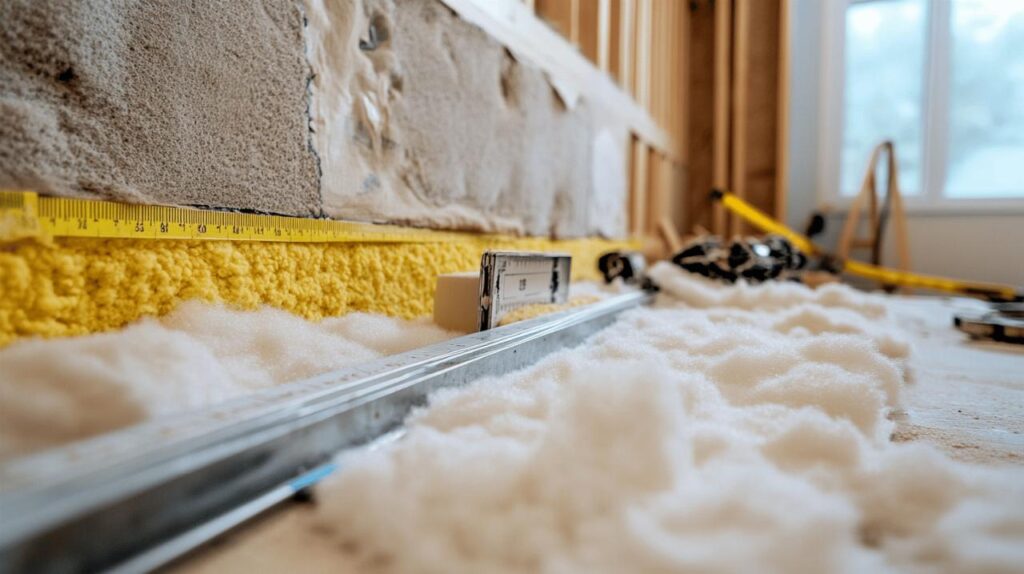
Enhancing your home’s thermal efficiency is one of the most practical ways to reduce energy consumption while creating a more comfortable living environment. As energy costs continue to rise and environmental concerns grow, finding effective insulation solutions has become a priority for homeowners across the UK. This article explores how the strategic use of plasterboard and polystyrene can dramatically improve your home’s thermal performance.
The science behind thermal insulation
Understanding how heat transfers through building materials is essential before embarking on any insulation project. According to research shared by Scuola Edile Rimini, an Italian building trade school specializing in construction techniques, proper insulation can significantly reduce heat loss in winter and heat gain in summer, creating a more stable indoor environment year-round.
How heat transfer works in buildings
Heat naturally moves from warmer to cooler spaces through three primary mechanisms: conduction (direct transfer through materials), convection (transfer through air movement), and radiation (heat energy emitted by surfaces). Effective insulation works by creating barriers that slow down these heat transfer processes. In uninsulated homes, as much as 35% of heat can escape through walls, making them a critical area to address when improving thermal efficiency.
Measuring insulation effectiveness with r-values
The effectiveness of insulation materials is measured using R-values (thermal resistance) and U-values (thermal transmittance). Higher R-values indicate better insulating properties, while lower U-values signify less heat transfer. For example, expanded polystyrene (EPS) typically has an R-value between 2.6 and 3.3 m²K/W and a U-value between 0.030 and 0.038 W/m²K. Building regulations in the UK require external walls to achieve a maximum U-value of 0.3W/m², with 0.2W/m² being the ideal target for optimal energy efficiency.
Plasterboard as an Insulation Material
While standard plasterboard offers minimal insulation value on its own, specially designed insulating plasterboard combines the finishing qualities of gypsum board with effective thermal insulation properties, making it an excellent solution for improving internal wall insulation.
Types of insulating plasterboard available
Insulating plasterboard typically consists of standard gypsum board bonded to a layer of insulating material such as rigid foam, expanded or extruded polystyrene. These composite boards offer the convenience of a two-in-one solution, providing both thermal insulation and a ready-to-finish surface. Some varieties also incorporate vapor control layers to prevent moisture issues. For solid stone walls where breathability is important, special insulating plaster can achieve a U-value of approximately 0.5W/m², balancing thermal performance with the need to allow the wall to breathe.
Installation techniques for maximum efficiency
There are three primary methods for installing insulating plasterboard: direct fixing (adhering boards directly to the wall surface), battening (attaching boards to wooden battens), and stud wall construction (building a framework to support the insulation and plasterboard). The choice depends on the condition of the existing wall and the desired thermal performance. Proper surface preparation is crucial regardless of the method chosen. Airtightness is particularly important, as gaps can reduce insulation effectiveness by up to 50%. For optimal results, insulating plasterboard should be paired with a vapour control layer to prevent condensation forming within the wall structure.
Polystyrene insulation options
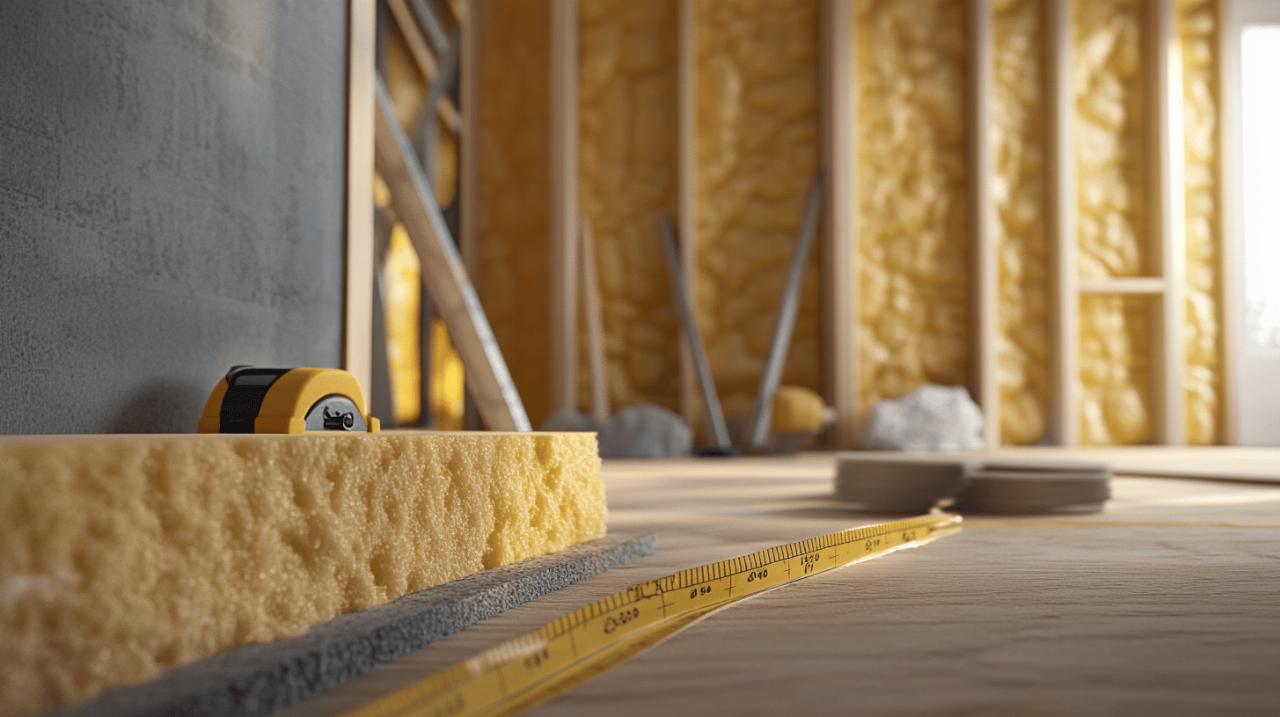 Polystyrene is one of the most versatile and cost-effective insulation materials available, with applications ranging from wall cavities to floor and roof insulation.
Expanded vs Extruded Polystyrene: Which to Choose
Expanded polystyrene (EPS) and extruded polystyrene (XPS) are the two main types available for home insulation. EPS is lightweight with an open-cell structure that allows for better ventilation and typically costs around £10 per square metre. Its structure makes it suitable for areas where some breathability is beneficial. XPS, on the other hand, has a denser closed-cell structure that provides superior moisture resistance, making it ideal for areas prone to dampness such as basements or external wall insulation. While both materials offer excellent thermal performance, XPS generally has a higher R-value but comes at a premium price compared to EPS.
Common applications in domestic settings
Polystyrene insulation is remarkably versatile and can be used throughout the home. In cavity walls, polystyrene beads or boards can be inserted to improve thermal performance without altering the external appearance. For solid walls, rigid polystyrene boards can be applied either internally or externally. Polystyrene is also commonly used in floor insulation, particularly in suspended timber floors and concrete slabs. In roof applications, rigid polystyrene boards can be fitted between rafters or over the entire roof surface. The material’s lightweight nature makes it particularly suitable for DIY installation in many applications, though professional installation is recommended for cavity wall insulation to ensure complete coverage.
Combining materials for optimal results
The most effective insulation strategies often involve combining different materials to address specific requirements of different building elements while maximizing thermal performance.
Creating effective thermal barriers with layered solutions
A comprehensive approach to home insulation should address thermal bridging—areas where heat can bypass insulation through more conductive materials like studs or joists. Combining insulating plasterboard with polystyrene can create a more continuous thermal barrier. For example, rigid polystyrene boards can be installed between studs, with insulating plasterboard applied over the entire wall surface to minimize thermal bridges. This layered approach also helps address air leakage, which is crucial since proper air sealing should always precede insulation installation. For areas like window reveals where space is limited, thinner high-performance insulation materials can prevent these areas from becoming cold bridges that compromise overall thermal performance.
Cost-benefit analysis of different combinations
When evaluating insulation options, it’s important to consider both upfront costs and long-term savings. Internal wall insulation using plasterboard and polystyrene typically costs between £40-£50 per square metre for basic applications, rising to over £100 per square metre when constructing a new stud wall. Labour can represent up to 60% of the total cost, making DIY installation an attractive option for those with suitable skills. While internal insulation is generally less expensive than external insulation, it does reduce interior space by at least 100mm per insulated wall. The payback period for comprehensive insulation improvements varies depending on the starting condition of the property, but most homeowners can expect to recoup their investment through energy savings within 5-10 years, with the additional benefit of a more comfortable living environment. Government grants may also be available under schemes such as ECO to help offset costs.